
Synthetic Detection
Stop automated traffic at the source.

Stops automated signups and deepfaked voices. Catches 99.6% of AI-generated voices from the newest voice engines.
The problem
The defences you already pay for are solved.
The controls stopped working. CAPTCHA is solved, SMS one-time codes reach whoever holds the number, and device fingerprints describe hardware that can be rented by the hour.
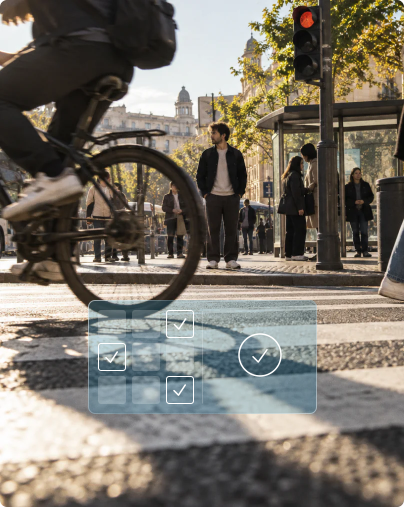
The gate is open
CAPTCHA is solved, not weakened
A 2024 ETH Zurich paper solved 100% of reCAPTCHA v2 challenges using off-the-shelf vision models — up from 68–71% in earlier work. The challenge now costs an attacker nothing and taxes only real users.
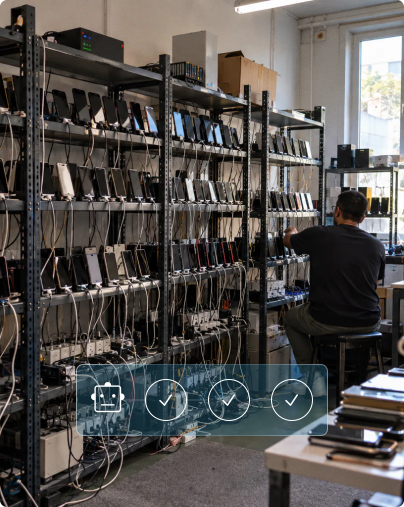
Fraud at scale
Agents do the whole job now
An LLM agent completes the challenge, holds the session, fills the forms and mimics human cursor movement — which turns what used to be one fraudulent signup into a thousand, at no extra cost.
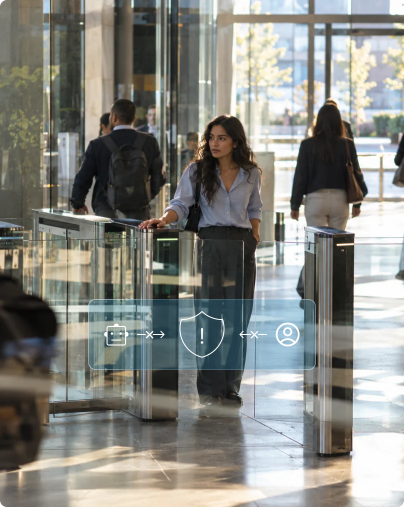
The cost of the fix
The check that stops bots stops your customers
Signicat found more than a third of European consumers had walked away from a financial application because they didn't have the identity credentials it demanded. Ask for a selfie instead and 52% say they would drop the purchase. Identity verification is not free security. You pay for it in signups.
How it works
One integration. Two layers of defense.
A passive detection layer scores every request silently at the edge. When something looks off, an active audio challenge confirms a real human in about four seconds.
Layer 01 — Passive
Predictive bot detection
Edge detection & routing
Helix fingerprints every device and predicts exactly how long it should take to solve a hidden challenge — before the challenge is even issued. Bots that solve too fast, too slow, or too perfectly are caught before they reach a single endpoint.
- Device & runtime fingerprinting (TLS / JA4, headers, timing entropy)
- Per-class expected-solve-time envelope computed before the challenge is sent
- Too fast → automation. Too slow → emulation. Either way, they are sent to the tarpit.
- The user never sees what's being measured or what the expected window is
Layer 02 — Active
A 4-second voice check
Step-up authorization
For ambiguous sessions, a short audio challenge confirms a real human in about four seconds. It runs entirely client-side — no PII leaves the device — and remembers the device so trusted users aren't asked twice.
- Verifies a real human in about 4 seconds
- Runs on the device: no PII stored, and audio never leaves the device.
- Device-bound: trusted devices don't get re-challenged
- No CAPTCHA, no images, no fire hydrants, no wild games
Detection accuracy
A perfect lab score means nothing on your signup page.
Deepfake detectors are graded on a scale where 0.50 is a coin toss and 1.00 is perfect. Three leading open-source voice detectors scored 0.99 to 1.00 on the academic test set they were built against. Then researchers played them deepfakes that were actually circulating online.
| Open-source voice detection | Its own academic test set | Deepfakes circulating in 2024 |
|---|---|---|
| P3 | 1.00 | 0.58 |
| RawNet2 | 0.99 | 0.53 |
| AASIST | 1.00 | 0.43 |
Measured independently by researchers at the University of Washington, the Allen Institute for AI and TrueMedia.org, across 56.5 hours of audio from a benchmark drawn from 88 real websites. The best of the three landed at 0.58. One scored worse than guessing.
P3
- Its own academic test set
- 1.00
- Deepfakes circulating in 2024
- 0.58
RawNet2
- Its own academic test set
- 0.99
- Deepfakes circulating in 2024
- 0.53
AASIST
- Its own academic test set
- 1.00
- Deepfakes circulating in 2024
- 0.43

Measured independently by researchers at the University of Washington, the Allen Institute for AI and TrueMedia.org, across 56.5 hours of audio from a benchmark drawn from 88 real websites. The best of the three landed at 0.58. One scored worse than guessing.
Reason one
The fakes moved. The detectors didn't.
An academic test set is a fixed list of voice generators. New engines ship every month. A detector tuned on last year's fakes has never heard this year's. Any accuracy number is a number against a particular set of fakes on a particular date. Ask any vendor which fakes, and when.
Reason two
A phone is not a server rack.
Lab scores come from models measured in gigabytes, given all the time they want. A check that has to clear in under a second on a mid-range Android gets a sliver of that budget. Most vendors dodge this by shipping your users' audio to a server. That buys back the compute and hands you the latency, the outage risk, and a biometric you now have to hold.
How it works
Smaller. Smarter. Faster.
Helix is 2,556x smaller than the best-performing server-side deepfake detection model while still winning on accuracy. That's small enough to run on the device itself, so detection skips the server round trip, latency drops, and raw audio stays where it was captured.

Model size
- DF Arena 1B4.6 GB
- Wav2Vec21.26 GB
- Helix Client v21.8 MB
2,556x smaller
- end to end
- About 4s
- audio never leaves the user's device
- On the device
- client model, ships with your app
- 1.8 MB
- no puzzle, no camera, no ID
- 4 numbers
Integration
Three lines. Bound.
Protect any route in under 5 minutes.
Install the SDK, invoke on the routes you care about, and read the result. Edge scoring and active challenges are automatic — you get a single verdict.
Get the SDKDrop the tag on any page
<script src="https:// cdn.jsdelivr.net/ npm/ @helix-id/ browser@0/ dist/ helix.iife.js"></script> Enroll once at signup
Helix.open({ startUrl: "/helix/ enroll", onSuccess: saveUser }); Verify on any high-risk surface
Helix.open({ startUrl: "/helix/ verify", onSuccess: grant });
Your server signs each start with @helix-id/node.
Ready to see it on your own traffic?
We'll run a shadow deployment against your real incoming requests and show you the agents we catch that your current stack misses.
The Helix stack
Also available within a single integration.
Three products, one SDK. Add Biometric Authentication and Age Assurance on the same tag you dropped for bots.